The Difference Between Happiness and Purpose: How to Find Real Meaning
We live in a culture that treats positive emotions as the ultimate goal. Advertisements tell us that a new purchase will bring joy, and social media feeds showcase endless moments of perfect bliss. Yet, many people feel a strange emptiness even when their lives seem successful on the outside.
You might have experienced this subtle ache yourself. Perhaps you achieved a major personal milestone or enjoyed a wonderful vacation, but the positive feelings faded within days. This happens because our society confuses two very different states of being. Understanding the true difference between happiness and purpose is the first step toward building a deeply fulfilling existence. This guide explores how to shift your focus from fleeting emotions to a grounded, intentional life.
Why Happiness Fades and Purpose Endures
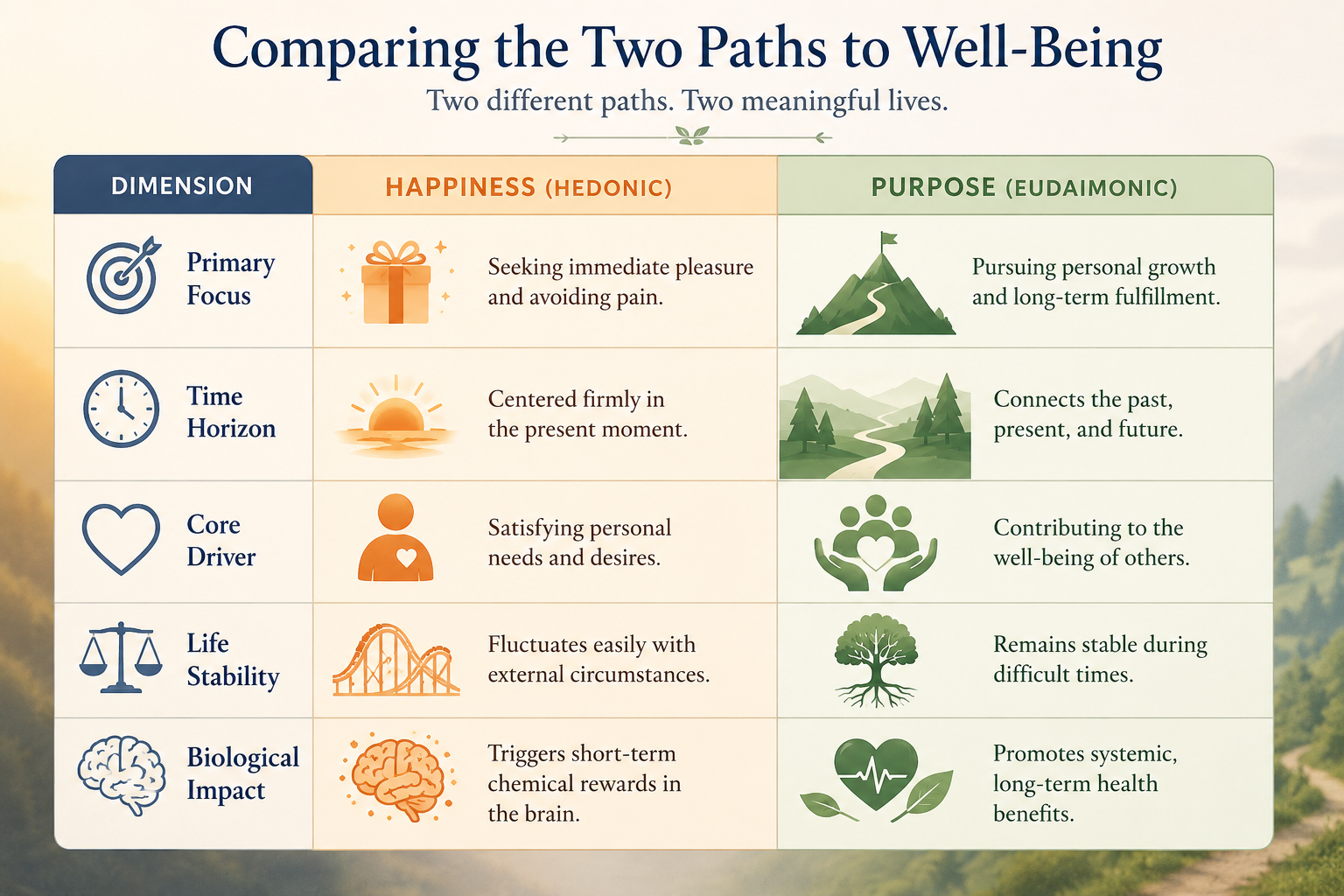
To understand why we feel unfulfilled, we must look at how these two experiences function in the human mind. Happiness is an emotion that depends heavily on immediate circumstances. It thrives on comfort, pleasant sensations, and the absence of struggle. Psychologists refer to this as hedonic well-being, which centers on seeking pleasure and avoiding pain [1].
Purpose, on the other hand, comes from what experts call eudaimonic well-being. This state of being focuses on meaning, personal growth, and contributing to something larger than yourself [1]. Happiness is mostly about receiving, while meaning is deeply tied to giving.
When you seek only joy, you become vulnerable to the natural ups and downs of life. Purpose gives you an anchor. It allows you to find value in difficult moments, because you see those challenges as part of a meaningful journey.
Actionable Real-Life Tips to Shift from Pleasure to Meaning
1. Reframe Your Daily Goals
Instead of asking how you can feel good today, ask how you can contribute. Shift your attention toward micro-actions that align with your core values.
A Real-World Example: Consider the difference between two ways of spending a Sunday afternoon. You could watch a lighthearted movie, which brings immediate, pleasant relaxation. Alternatively, you could spend that time listening to a friend who is going through a difficult divorce. The conversation might feel heavy or emotionally demanding, but you leave it with a profound sense of connection and contribution. That lasting feeling is the essence of purpose.
2. Practice Mindful Acceptance of Discomfort
A meaningful life requires you to do hard things. When you encounter stress or fatigue while working toward a grand goal, welcome those feelings as signs of growth.
Data shows that people who pursue a meaningful path report higher levels of anxiety and stress than those who chase pure comfort [2]. However, they also report much higher levels of overall life satisfaction. Growth and comfort rarely coexist.
3. Connect with Something Larger Than Yourself
Dedicate a small portion of your week to an activity that benefits your community, your family, or a cause you care about deeply. True meaning emerges when your skills meet the needs of the world around them.
The Scientific Reality of a Purposeful Life
The human brain responds to these two states in radically different ways. Research in positive psychology reveals that chasing happiness can sometimes backfire, making people feel more isolated [3].
Conversely, having a strong sense of direction acts as a protective shield for your health. A landmark study published in The Lancet tracked thousands of individuals over several years. The researchers discovered that people with a high sense of eudaimonic well-being lived longer and showed a significantly lower risk of developing cardiovascular issues [4].
Deepen Your Practice and Find Your Alignment
Moving away from the constant chase for positive emotions requires patience and consistent practice. If you want to dive deeper into this journey, structured meditation can provide the clarity you need.
I invite you to explore my online courses, where we break down the mental blocks that keep you stuck in temporary pleasure cycles. Together, we will learn to quiet the mental noise, cultivate deep self-awareness, and uncover the lasting values that give your life true direction.
Sources
[1] Ryan, R. M., & Deci, E. L. (2001). On happiness and human potentials: A review of research on hedonic and eudaimonic well-being. Annual Review of Psychology, 52(1), 141-166.
[2] Baumeister, R. F., et al. (2013). Some key differences between a happy life and a meaningful life. The Journal of Positive Psychology, 8(6), 505-516.
[3] Mauss, I. B., et al. (2011). Can seeking happiness make people unhappy? Paradoxical effects of valuing happiness. Emotion, 11(4), 807-815.
[4] Steptoe, A., et al. (2015). Subjective wellbeing, health, and ageing. The Lancet, 385(9968), 640-648.