How Childhood Experiences Shape Adult Self-Worth: A Guide to Healing
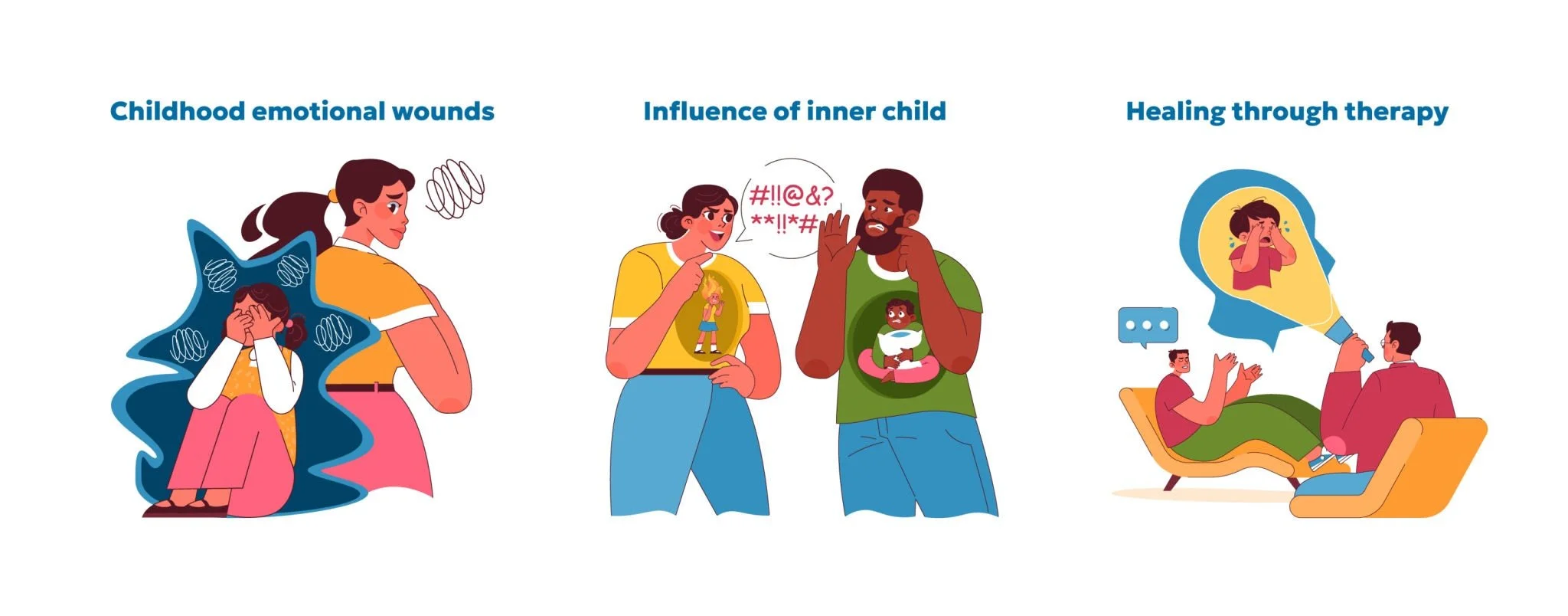
The journey to robust self-worth begins by gently exploring our early foundations.. Source: Guzaliia Filimonova / Getty Images
Have you ever felt an underlying sense of inadequacy, even after achieving a major life goal? Perhaps you find yourself trapped in chronic people-pleasing, or you feel an intense fear of failure that paralyzes your creativity. Many adults carry a quiet, persistent whisper that tells them they are not quite enough.
These patterns do not emerge out of nowhere. We must understand how childhood experiences shape adult self-worth before we can break free from these deeply ingrained limitations. Your early environment acted as the original blueprint for how you view your value today. This guide explores the deep psychological roots of your self-esteem, provides scientific context for your emotional habits, and offers actionable steps to help you heal.
The Architecture of Your Belief System
During the first seven years of life, the human brain operates primarily in low-frequency theta brainwave states. This means a young child absorbs observations directly into the subconscious mind without an analytical filtering system. You did not just learn how to speak or walk, because you also absorbed your caregivers' reactions, coping mechanisms, and emotional availability.
Psychologists refer to this foundation as attachment theory [1]. When caregivers provide consistent emotional warmth, a child develops a secure attachment style and views the world as a safe space. Conversely, if love felt conditional on your achievements, behavior, or grades, your subconscious mind likely adopted a difficult belief. You learned that your value depends entirely on external validation.
In adulthood, this conditioning manifests as an exhausting cycle. You might achieve immense career success, yet you still feel like an impostor. This happens because your rational adult mind is trying to build a stable life on top of an insecure childhood foundation.
Actionable Real-Life Tips to Rebuild Your Self-Worth
1. Identify Your Subconscious Core Beliefs
You cannot change what you do not notice. Pay close attention to your internal dialogue when you make a mistake. Do you speak to yourself with harsh criticism, or do you offer yourself gentle understanding?
A Real-World Example: Consider Sarah, a talented graphic designer who feels intense anxiety every time she submits a project. If her manager requests a minor edit, Sarah instantly feels a wave of shame and believes she is bad at her job. By tracing this feeling backward, Sarah remembered that her parents only praised her when she brought home flawless report cards. She realized that her adult anxiety was actually her inner child trying desperately to remain perfect to ensure she was loved.
2. Practice Reparenting Through Mindful Self-Compassion
Reparenting is the conscious practice of giving yourself the emotional validation that you lacked during your formative years. When you feel triggered or insecure, pause and take a deep breath. Acknowledge the emotion without judgment.
Data indicates that treating yourself with kindness instead of harsh judgment during a failure significantly improves long-term emotional resilience [2]. You can tell yourself a simple, grounding phrase: "I am safe, I am worthy, and I am allowed to make mistakes."
3. Establish Firm, Healthy Boundaries
Low self-worth often causes adults to overcommit because they fear that saying no will cause others to reject them. Practicing boundaries protects your energetic output and teaches your subconscious mind that your time and peace are inherently valuable.
The Scientific Reality of Healing Early Roots
The impacts of our earliest relationships are not just psychological concepts, because they alter our physical biology. Landmark research on Adverse Childhood Experiences (ACEs) demonstrates a direct link between early emotional environments and adult psychological well-being [3]. Chronic stress in childhood can keep the nervous system in a permanent state of hypervigilance, making it difficult to feel secure as an adult.
The brain possesses a remarkable trait called neuroplasticity [4]. Neuroplasticity is the capacity of the brain to form new neural pathways and reorganize itself across your entire lifespan. You are not permanently locked into the conditioning of your past. Consistent mindfulness practices can literally alter the structure of your amygdala, which calms your stress response and allows you to rebuild your self-worth from a place of deep stability.
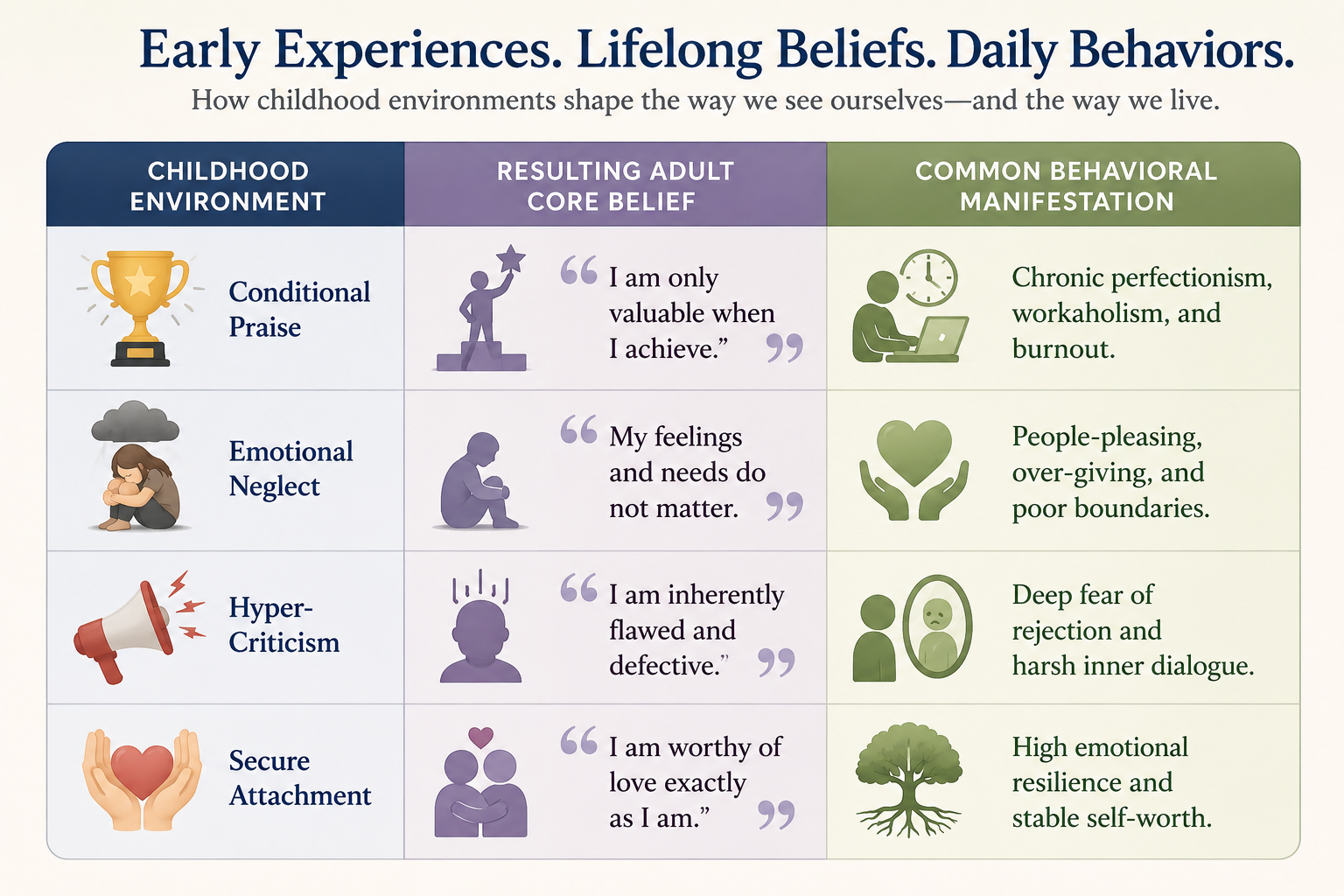
How childhood shapes beliefs and behaviours
Deepen Your Practice and Transform Your Foundation
Unpacking how childhood experiences shape adult self-worth is a tender, ongoing journey that requires immense patience. Reading about healing is a wonderful first step, but real transformation occurs when you bring experiential awareness into your daily routine.
I invite you to explore my guided meditation courses. Together, we will gently explore the subconscious landscapes of your childhood, release the weight of old expectations, and settle into a profound, unshakeable realization of your intrinsic value.
Sources
[1] Bowlby, J. (1982). Attachment and loss: Vol. 1. Attachment. New York: Basic Books.
[2] Neff, K. D. (2003). Self-compassion: An alternative conceptualization of a healthy attitude toward oneself. Self and Identity, 2(2), 85-101.
[3] Felitti, V. J., et al. (1998). Relationship of childhood abuse and household dysfunction to many of the leading causes of death in adults: The Adverse Childhood Experiences (ACE) Study. American Journal of Preventive Medicine, 14(4), 245-258.
[4] Davidson, R. J., & McEwen, B. S. (2012). Social influences on neuroplasticity: Stress and interventions to promote well-being. Nature Neuroscience, 15(5), 689-695.